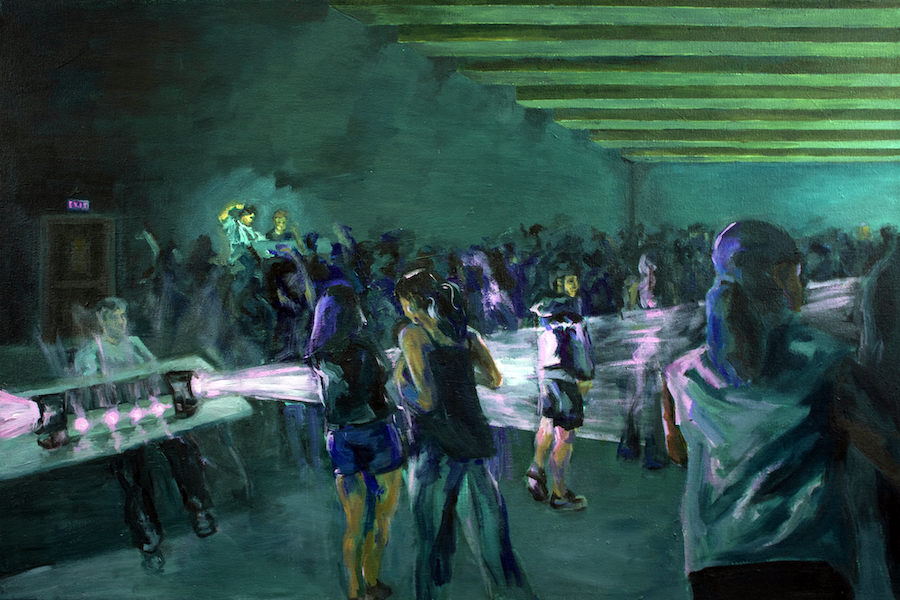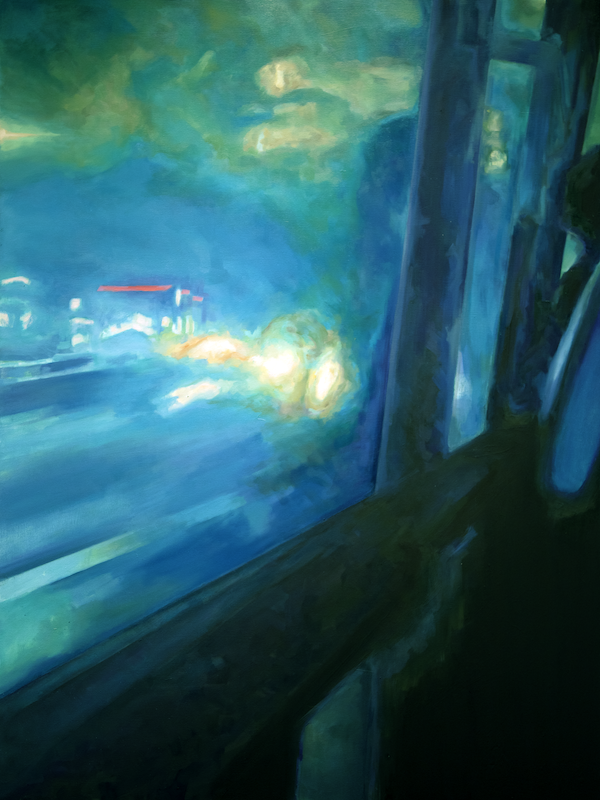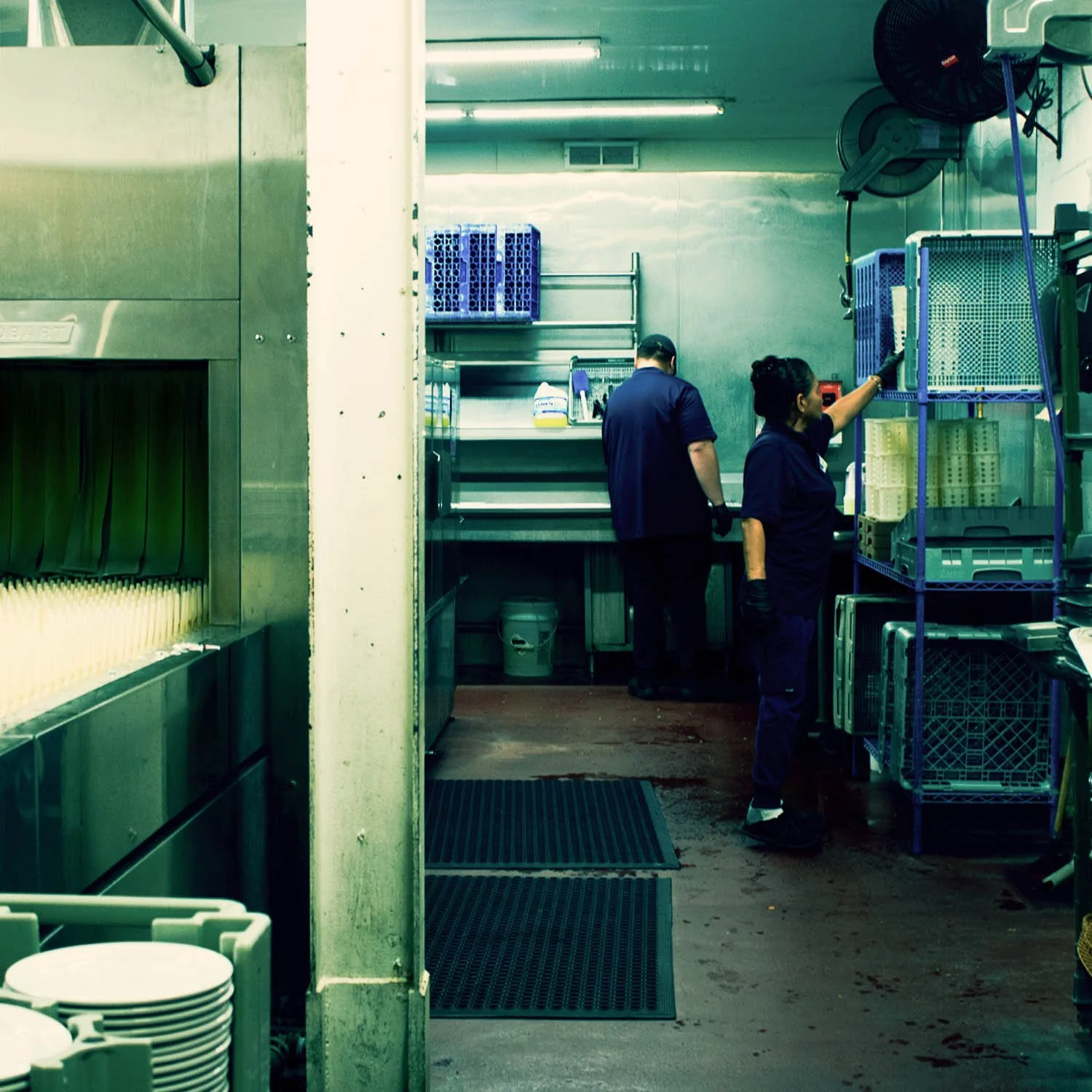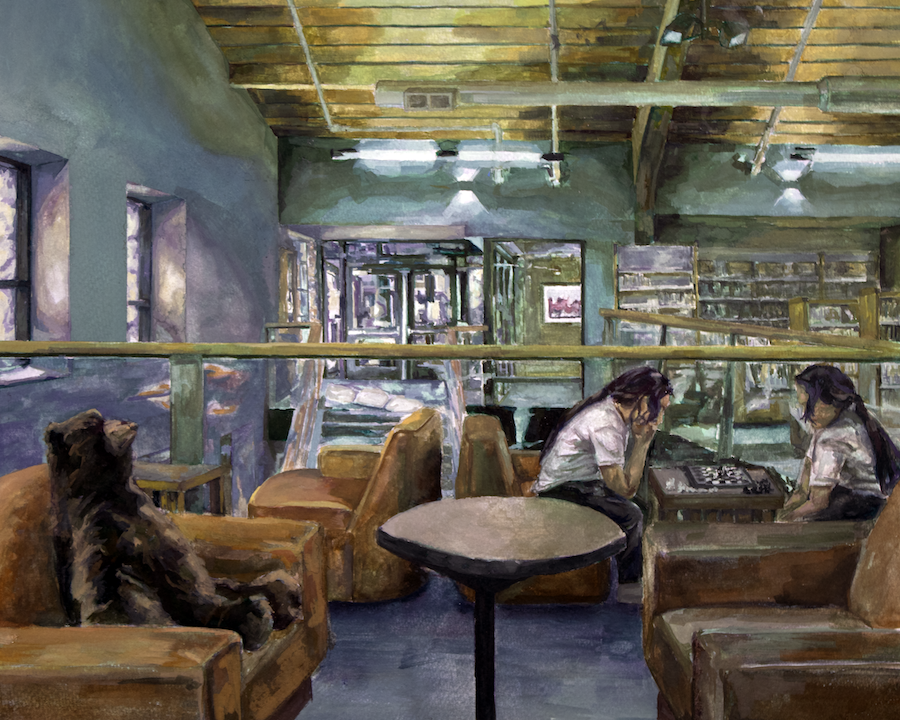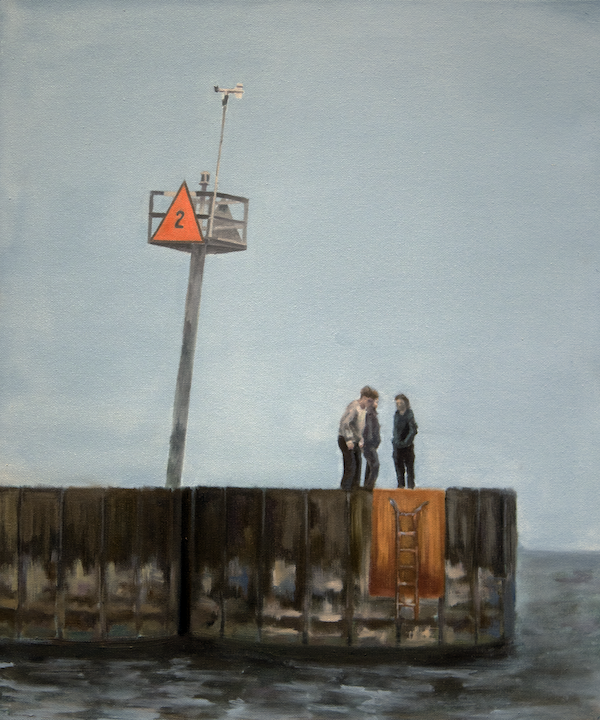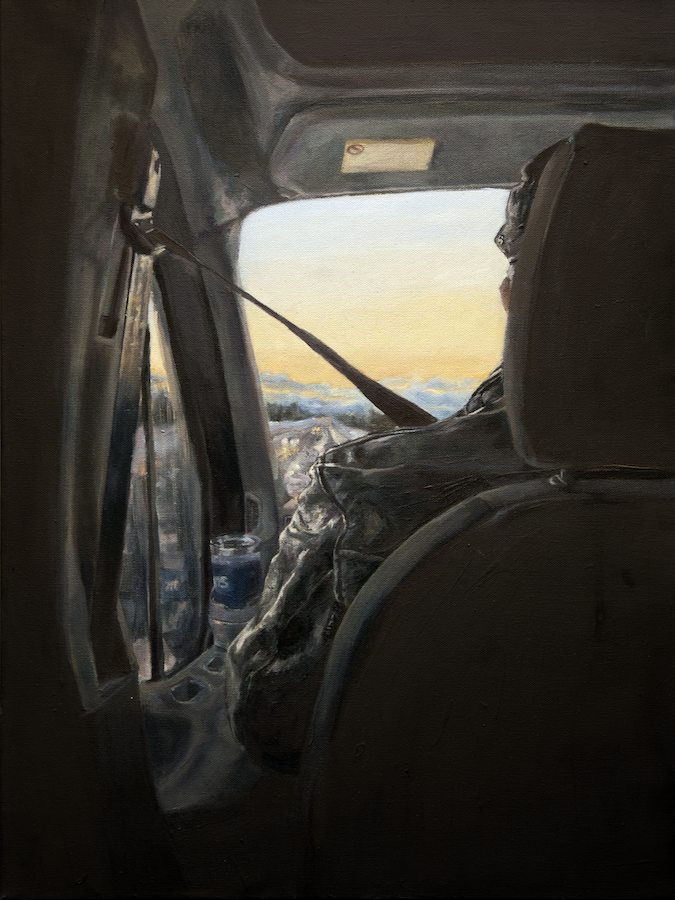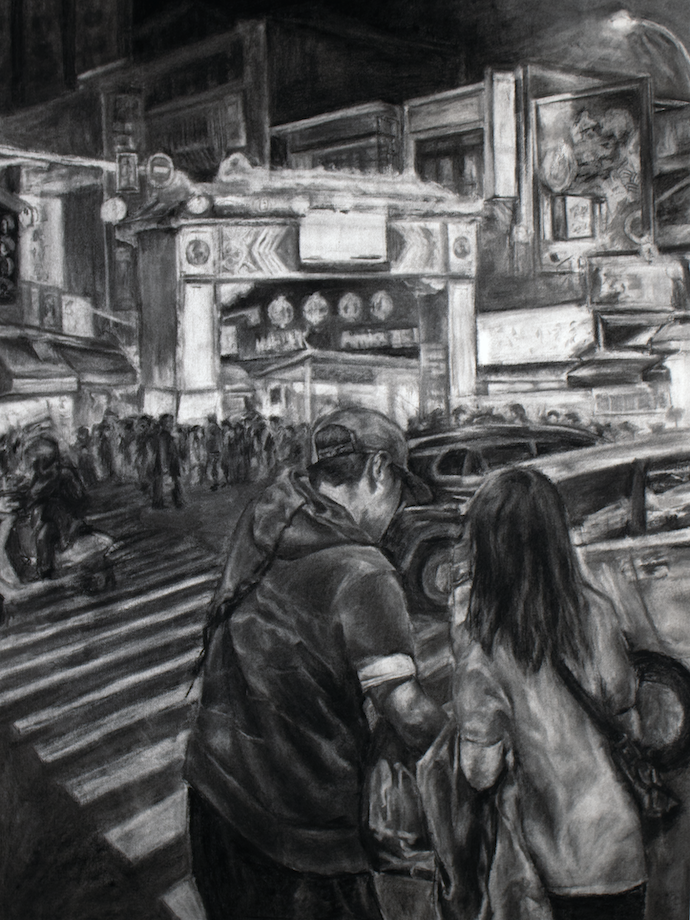
My thesis is shaped by my experience coming to Interlochen for my final year of high school, which was a decision made emotionally and spontaneously. As someone who is typically driven by reason and afraid of taking risks, the move to Interlochen and the subsequent hours spent creating art pushed me far past my comfort zone. This sense of unease characterizes my work as I investigate the driving question of my portfolio: what intangible factors shape how I perceive my environment? Each piece is based on a photograph taken impulsively. I choose subjects based on feeling, and the act of painting becomes a way to analyze why they resonated with me.
I focus on transient scenes and intentionally introduce discord to reflect an inherently
inharmonious reality. One strategy approach is mixing traditional and synthetic pigments such as dioxazine purple, phthalo green, cadmium orange, and quinacridone magenta with yellow ochre and burnt umber, creating visual tension as bright synthetics threaten to overwhelm the traditional tones. I also contrast permanent architectural structures with the fleeting presence of people, who function as props attempting to assign meaning to otherwise meaningless spaces.
Depending on the scene, this dynamic can evoke either comfort or anxiety, mirroring my shifting perceptions. Although my references are spontaneous, my process is deliberate. I begin by carefully cropping each image, using the constraints of a rectangular format to prioritize key elements. A limited color palette unifies the work and establishes mood. While I am naturally drawn to maximalism for its engagement in process, I challenge myself toward minimalism, becoming more intentional with space and value.
Balancing process and product remains the central challenge. I am drawn to making for the sake of creation, yet I recognize the importance of making art digestible for the viewer. As a result, I increasingly rely on strong composition and value to ensure the work can be perceived at a glance. I also embrace larger areas of negative space to improve visual clarity. Ultimately, regardless of how viewers engage with the work, I hope each piece offers them something meaningful.